Showing posts with label Michigan. Show all posts

Monday, June 7, 2010

Buy Local First!


“We all participate in weaving the social fabric; we should therefore all participate in patching the fabric when it develops holes.” ~Anne C. Weisberg

Two or three years ago – when I started contributing “ditties” to the Drummond Island Digest – my first essay was on the ritual and routine of stocking an Up North pantry. Anyone born and raised in the north (or lucky enough to have a second home Up North) knew all to well the custom I spoke of in that article:

You walk around the house with a pad of paper and pencil, opening all the pantry doors as you jot down the essentials that need to be re-stocked. Then you call your closest friends and relatives to let them know you are “making a run” and get their lists. When the big day comes the kids all vie for “shot-gun” and you head out early in the morning for a day of shopping in the big city.

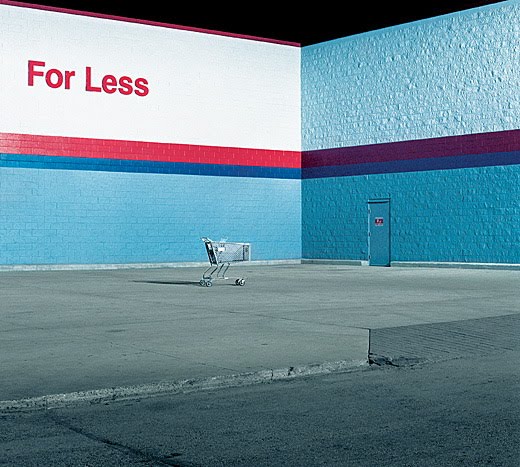
Let’s face it, retailers and warehouse super stores that can only be found in larger communities make “one-stop shopping” a concept that appeals to all of us. And when these stores can lure us in with lower prices and super sales we feel good about the money we think we are saving. But there is a hidden price . . . and one that can end up drastically altering our own small community.

In these hard economic times by thinking local first we make choices that have dramatic impact on our community, our economy, and our environment. While it will rarely be possible to buy everything we need or use from local independent businesses, I am advocating for people to first think local in order to maximize the impact of daily actions and purchasing decisions. Buy LOCAL First refers to a commitment to our community.

Compared to national competitors, local independent businesses return more money to the local economy and give an average of two to three times greater support to non-profit organizations. They are better positioned to respond to the special needs of the community and more invested in its future. When was the last time you saw Wal-Mart listed in the Digest as a sponsor for the March of Dimes Dance, the Hunter’s Dinner or the Snowmobile Grooming Fund-raiser?

Local, independently owned businesses are the backbone of an economy, the lifeblood of a community. By increasing the number of independent, local-to-local economic transactions, we:

*Support local entrepreneurs

*Sustain family farms and orchards

*Create local jobs that stay in our community

*Have greater control over environmental impacts

*Increase sales and tax receipts to finance schools, police and fire departments, arts, roads, and open spaces

*Maintain a unique sense of place, directly contributing to what will keep our home place alive and special in the long-run

*Maximize the economic multiplier (that means every expenditure of a dollar generates more than a dollar's worth of activity and cascades into a larger number of transactions that enrich the community).

Choosing local over non-local has 2-3 times more financial impact in our community, promotes more reinvestment locally, creates quality jobs, and encourages more donations to local charities and causes.

Several studies have shown that money spent at a locally owned business stays in the local economy and continues to strengthen the economic base of the community. A 2002 case study in Austin, Texas showed that for every $100 in consumer spending at a national bookstore in Austin, Texas the local economic impact was only $13. The same amount spent at locally based bookstores yielded $45, or more than three times the local economic impact. (Civic Economics, Austin Unchained October 2003)

A 2003 case study of Midcoast Maine covering several lines of goods and services validated these findings. In Maine eight locally owned businesses were surveyed. The survey found that the businesses spent 44.6 percent of their revenue within the surrounding two counties. Another 8.7 percent was spent elsewhere in the state of Maine. The four largest components of this local spending were: wages and benefits paid to local employees; goods and services purchased from other local businesses; profits that accrued to local owners and taxes paid to local and state government. All eight businesses banked locally, used local accountants, advertised in local businesses publications, purchased inventory from local manufacturers, and used local Internet service providers and repair people. The study estimated that a big box retailer returns just 14.1 percent of its revenue to the local economy, mostly in the form of payroll. The rest leaves the state, flowing to out-of-state suppliers and back to corporate headquarters. (The Economic Impact of Locally Owned Business vs. Chains: A Case Study in Midcoast Maine - New Rules Project, September 2003.)


We all support and count on doing business with people in our community, but what we don’t take the time to think about is how our community and ultimately our livelihood is affected when 85 percent of each retail dollar we spend at a national chain is sent somewhere out of state. Are we really “saving money” if our community’s retail dollars are not cycling back into our own local economy? Are we really “saving money” if our local merchants have to raise their prices in order to meet their overhead . . . or are forced to close their doors altogether due to lack of revenue? Are we really “saving money” if our local and state governments have to raise taxes or cut back on services that we wind up having to pay for?
I am getting ready to “re-stock” the pantry on Drummond and I know I can get cases of the things I need much “cheaper” down-state. But how much would I really save? Are my retail dollars ensuring that this community I have come to know and love continues to thrive? I, for one, know my quality of life would be greatly diminished if I couldn’t pop into the four corners for a bouquet of flowers, a sheet of plywood and the latest fashion magazine. And the members of this community have been truly blessed by merchants who have had the resources to donate to countless fundraisers.

We are blessed on Drummond with a variety of independent merchants of every kind. We might want to think about the greatest gift we can give both the community and ourselves . . . and the money we can “save” . . . by choosing to shop more in our own community.

“Examine each question in terms of what is ethically and aesthetically right, as well as what is economically expedient. A thing is right when it tends to preserve the integrity, stability, and beauty of the community. It is wrong when it tends otherwise.” -Aldo Leopold

Tuesday, June 1, 2010

The Hatch is on!


Think how fast a year flies by

A month flies by

A week flies by

Think how fast a day flies by

A Mayfly’s life lasts but a day

A single day

To live and die

A single day

How fast it goes

The day

The Mayfly

Both of those.


A Mayfly flies a single day

The daylight dies and darkness grows

A single day

How fast it flies

A mayfly’s life

How fast it goes.

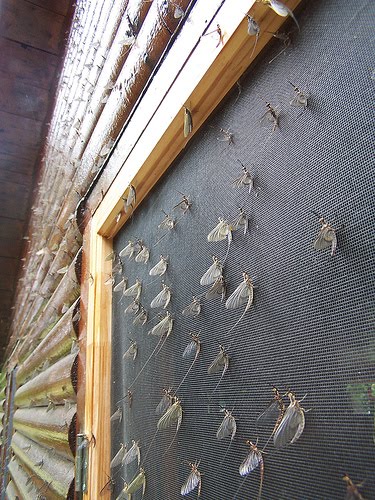
It starts like a rise of small trout. There are dimples on the surface, little fingerlings eating midges, perhaps. But these are no fish. The water breaks and up pop the wings of a Mayfly, then another and another. The hatch is on!

This legend plays out every year on calm, dark, humid nights in late May and early June. The mayflies make the television news by showing up on doppler radar or calling snowplows out of dormancy to remove layers of duns from bridges.

Mayflies have two adult stages. They first emerge from the water as duns (scientifically known as the subimago stage). They then molt into the spinner (imago) stage, in which they mate and die.

This poem is from the book The Llama Who Had No Pajama by Mary Ann Hoberman. Hoberman's poems, accompanied by Fraser's illustrations, have been delighting children for 40 years. Now, many poems from their out-of-print books are available in this fun collection. The selections are mostly humorous, sometimes contemplative, and deal with animals, family, play, and plain silliness.

Sunday, May 30, 2010

Dining in the Great Outdoors!


Although the official start of summer isn’t until June 21st, Memorial Day is considered the “unofficial” kick-off to warmer weather, longer days – and outdoor dining.

Grills will be dragged from garages. Tables and chairs hauled to the deck. Entire outdoor kitchens will be set-up and stocked. All of this so we can enjoy - after a long hard winter stuck inside - with finally being about to eat - outside!

I am in love with outdoor dining. I will brave heat, wind, rain and sometimes bugs just to eat outdoors. I have been know to Google local restaurants just to find one with "outdoor seating". Come summer - even with an entire restaurant full of empty tables, I will still ask - "Do you have anything outside?"

I will happily leave the comfort of a climate-controlled, gently lit indoor restaurant to sit in 90-degree, humid sunshine that forces me to wear sunglasses in order to see my dining companions. Doesn't matter. I am eating outside!

Wind whips my hair into my mouth as I chew - no big deal. I am eating outside! A hike down the deck and through the restaurant to get to the restroom - doesn't matter. I am eating outside! There's just something about eating outdoors that makes everything taste extra delicious.

There is something magical about eating outside that makes it worth the risk. When it doesn’t burn, the sun feels lovely; when it doesn’t gust, the wind feels playful. The night can seem more romantic outside. And eating outdoors is inherently more casual than dining inside. It’s hard to feel too formal while listening to frogs croak or watching squirrels race by.

So join me! Enjoy yourself - find someplace special to plop yourself down in a comfy chair pulled up to a table on an deck somewhere and breathe in the intoxicating air of the great outdoors!

"One cannot think well, love well, sleep well,
if one has not dined well." -Virginia Woolf

Thursday, May 20, 2010

Every Adventure Starts and Ends on the Ferry!

The rhythms and rituals of life on the Island are sacred – the ceremonial arrival and departure by ferry; Bayside dinners with terrific food and breathtaking views; the unspoken decree against high heels (although I must admit that I am guilty of ignoring that one out of sheer vanity); and the generational parade of robust kids, running, swimming, squealing, sledding, and coming of age in the woods and on the waters of Drummond.

But getting to Drummond means that your business must first come through the ferry dock – with a tempo and hierarchy unlike any other place. Everyone and everything is on display as vehicles come and go and wait. Everyone’s stuff is on view piled in a backseat, a bed of a truck or stacked high on a trailer. You know what stores people shop at. You know who is getting new furniture. You know what books, magazines and papers people read to pass the time. And you also get a glimpse into each other’s relationships as passengers are dropped off, picked up and said goodbye or hello to.


The ferry also marks the passage from one world to another. The pace of the Island has always been intertwined with the coming and going of the ferry. And life on the Island is a reflection of this marvelous relationship. “Island Time” means a more relaxed way of life – and the wait for the ferry is the first step into a mood and pace that is always of an unhurried nature. This distinctive lifestyle and its gentle easy rhythms are as much a part of the landscape as are the waves lapping at the shore. Waiting for the ferry makes for a wonderful chance to practice patience . . .

Patience is the best remedy for every trouble and Drummond is the best medicine for dealing with the stress of life off the Island. Mahomet once said, “Patience is the key to content.” And I have often been known to exclaim that I am the most content woman in the world when I am back “home” on Drummond.

And so every trip across M-134 brings with it a peaked sense of anticipation – the wait for the ferry always putting extra emphasis on what it really means to get here.


This was one of the first Blogs I posted when starting this page - it bears repeating now as many of us are planning our Great Escapes to the Island for the Summer Season. Hope you enjoyed it the second time around too!

If you are not into sauntering and need to plan your trip down to the last little detail - here's a great link for info on the Ferry schedule:


Tuesday, May 18, 2010

Out-on-the-Hook!


“Sometimes we are lucky enough to know our lives have been changed, to discard the old and embrace the new and run headlong down an immutable course. It happened to me . . . on that summer’s day when my eyes were opened to the sea.”  - Jacques Yves-Cousteau


Blue-green stretches of water, emerald islands scattered across this fluid canvas, and warm pine-laden breezes – when it comes to restoring body and soul, no place in the world can compete with Drummond Island. And few other places in the world can inspire one to explore, again and again, the tapestry that makes up a summer spent in the north; the rituals of family, the pleasures of friendship, and the immutable cycles of the natural world. There is a depth of feeling and wonder that lies at the very core of spending one’s summer Up North.


For me there is no sweeter pleasure than a summer day spent out-on-the-hook in Harbor’s big bay. I wake up early in the morning, squint up at the sky to see if the haze margin that promises a scorcher is smudging the horizon, pack a lunch, a hat, some sun block, snatch a bottle of water, and dash out the door. I inevitably run back for the book and bottle of wine I left on the table, then dive into the car and head down to Yacht Haven. My adrenaline is pumping in fierce anticipation, and finally – there it is: the jockeying for a parking space, the hunt for the cart to haul items down the dock and the first deep inhalation of diesel as the Up North’s engine turns over and comes to life. Bingo! All my senses are buzzing with the intoxicating elixir of the elements!

It’s WATER time!


Once anchored out in Harbor I take up residence on the deck – my head falls back unto a pillow. I angle my hat, adjust my sunglasses, open my book and settle into nirvana. Lord Bryon once wrote “There is society where none intrudes/By the deep Sea, and music in its roar: I love not man the less, but Nature more.” I would have to agree with this great swimmer wholeheartedly.

Once significantly toasted top and bottom I predictably dive into the water. Half submerged, at one with the aqueous mystery below; I bob around the boat, exposed to the sun and air from the neck up. I am on sensory overload, and I haven’t even broken any laws! I am the most content woman in the world. I surrender to the rhythm of the water and my mind goes as blank as the sky. I might swim a few strokes and then turn on my back to float, letting the energy of the water pass around and through me.

After a while I come back to the present, climb up on to the boat, and flop on to a towel laid out on the deck in a coma of bliss. I slowly drift off to sleep – the smile on my face the same as it was when I was a child and my eyes were first opened to lazy summer days spent out-on-the-hook.

“Summer afternoon – Summer afternoon – the two most beautiful words in the English language.”  – Henry James

Tuesday, May 4, 2010

Good Food, Good Wine, and a Bad Girl!


There is nothing like good food, good wine, and a bad girl. - Fortune cookie

The Summer Social Season on Drummond Island is about to offically begin! It will be heralded in by one of my most anticipated and relished events of the season – a Wine Dinner at Bayside.

There really is nothing like good food and good wine. Being a bad girl, I should know!

But honestly, I have always found the world of wine just a tad bit pretentious. Maybe that is because I was introduced to this universe late in life when I first met my husband, Barry. Despite his patience and tutelage I have yet to feel I am an accepted citizen of the wine world. Not that I don’t love a good glass of fermented grapes – in fact these days I prefer one to a glass of hops and barley. But I must confess – there was a time when I thought Char Donay was a lady from France!

This confession led to Barry purchasing a book designed to help me gain some wine smarts titled, The Saucy Sisters’ Guide to Wine. The Sisters claim that becoming a “wine diva” will give me entrée to a world of “greater popularity, love, sex, health and beauty.” What more could a bad girl ask for? They instantly sold me on boldly exploring this new wine-tasting frontier!

And there is no better venue’ for such study than a Bayside Wine Dinner where Rob, wine connoisseur extraordinaire, takes the time to walk you through each course and it’s accompanying beverage.

But again, I must be frank – sometimes Rob’s commentary begins to sound more like blah, blah, blah then “This is a wonderful chard for the price.” or “I can’t believe I was able to get this cab for tonight’s event.” There are times when, from my perspective, he may as well be speaking in tongues. Maybe he is.

Whatever language he is speaking, it is always clear to me I don’t totally comprehend the just of his meaning. Chard? Cab? Growing up in the Soo a chard was a burned up log or tree from either your burning pit or a wildfire. And a cab was something I didn’t see in person until well over the age of 21 – but I knew it was yellow because of picture books in St. Mary’s library.

When I am asked about wine in public, Barry better be by my side – otherwise I am likely to go off on how I typically judge a wine first by its label. Does it go – read coordinate – with what I am serving? And no, I am not talking the same language as Rob here. I am talking the language of a Fashionitis – does the label coordinate well with what I have going on in terms of color, texture, and style? A well dressed table is a MUST for all meals – wine bottles must not clash with the décor.

Luckily there is a portal into the world of wine for the like’s of me – and it is easily accessible to anyone attending a Bayside Wine Dinner. That portal is Rob. While he may at times appear to be speaking a foreign language he works hard to take the pretension out of his passion. Zinfandel with your Tex-Mex? Not a problem. A little chardonnay with your All-You-Can-Eat Whitefish at the Northwood? Delicious. Pinot Noir and wild venison? Why not?

I like Rob. He just might keep me from feeling like I am over a barrel the next time wine comes up in a conversation. So as Aristophanes, a B.C. bad boy, very cleverly put it - “Quickly, bring me a beaker of wine, so that I may wet my mind and say something clever.”

NOTE: If you would like to experience a Wine Dinner @ Bayside for yourself I understand the next event is scheduled for Sunday, June 4th. See you there!

Drummond Island Resort and Conference Center
Bayside Dining

Monday, May 3, 2010

Jeepers, Creepers, Love to Hear Them Peepers!


As we peepers peep

We keep the people from their sleep.


Others hear our chorus

And know such swells of spring

A surest sign new life it is to bring.


In our search for other peeps,

We sing all night as we creep

And jump around the deep.

Spring Peepers - a poem by Catinka Knoth 2010

Drummond Island is being serenaded by the lowly little spring peeper, also known as the tree peeper. Right now a concert can be heard on any given evening.

These little frogs, not much more than an inch to an inch and a half, are difficult to find. They nest in and around trees; their brown and tan bodies resemble leaves. They blend in really well.

Like many frogs and toads, the peeper’s song is far louder than one might imagine. Peepers are a type of chorus frog, many call at the same time making their songs blend. The song of the spring peeper is often one of the first recognized by children.

If you are not sure what a Spring Peeper sounds like then enjoy the following video shared by Betsy Purple — April 29, 2007 — video made at a beaver pond in the U.P.

Saturday, May 1, 2010

Drummond Island Sunsets . . .

Note: Please wait the few seconds it takes for the slideshow to load. To truly appreciate the photos, click on the small icon in the lower righthand corner of the slideshow toolbar to go to *full screen*.
Then just sit back and enjoy!

Drummond Island Sunsets View Photo Slideshow


Make a Free Flash Slideshow

This slide show was made possible by all the wonderful
Drummond Island Michigan Facebook *Fans*
who generously shared their favorite DI sunset photos.
Special thanks go to the following (in no special order):
Chris Taylor, Aaron Belanger, Karen Elve, Dm Brys, Jack Egan, Heidi Heskett, Brad Rau, Missy Anderson, Gary Krywko, Scott Laaskso, Cj Roggow, Jacquelyn Guisbert, Summer Bartholomew Rose, Bill Bridges, Ross M. Kaplan, Aaron M. Jones, Derek Torno, DIsnowshoes, Danielle Guntzviller, Shannon Rose, Sarah Schackow, Betsy Boris, Jeannie Myers and your's truly, Candis Collick

Sunset Song . . .


A fitting tribute to the new Drummond Island Sunset photo album - enjoy!


Richard Thompson was named by Rolling Stone Magazine as one of the Top 20 Guitarists of all-time and the recent recipient of both an Ivor Novello Award for Songwriting and the 2006 BBC Lifetime Achievement Award, the iconic British folk rock legend is one of the world's most critically acclaimed and prolific songwriters.

The Drummond Island Sunset photo album can be found at this link:


Friday, April 30, 2010

Always the end of a perfect day . . .


May I never miss a sunset
or a rainbow because I am looking down.
- Sara June Parker

I am putting together a Photo Album of Drummond Island sunsets on the DI Facebook page. If you, or someone you know, has taken a DI sunset photo please share it with me so it can be included. I will be posting the best of the best on the Blog next week.
Thanks to all who have contributed so far!

Thursday, April 29, 2010

Black Fly Season!


Old Black Fly's been

buzzin around,

buzzin around,

buzzin around.


Old Black Fly's been

buzzin around,

And he's had a very

busy bad day.


He ate on the crust of the Apple pie.

He bothered the Baby and made her cry.


Shoo fly! Shoo fly! Shooo.

SWAT!


From the book Old Black Fly by Jim Aylesworth. An entertaining, surprising twist on the traditional alphabet book. The pesky old black fly is making trouble all over the house and all through the alphabet.


Black fly season occurs from mid-March to mid-July in the Upper Peninsula of Michigan. Some backpackers, campers and fishermen avoid outdoor activities during black fly season, but the rest of us soldier on despite the bugs, glad to escape the confines of snow-bound home life.
 
Like mosquitoes, black flies gain nourishment by sucking the blood of other animals. Actually, it's just the females who feed on blood: the males feed mainly on flower nectar. Unlike mosquitoes, black fly eggs are laid in moving water where the larvae attach to rocks using tiny hooks and survive under ice, waiting for the spring thaw. There, they pupate under water feeding on passing organic debris and emerge in a bubble of air as flying adults. When they hatch, they are often preyed upon by fish, such as trout. They live about 4-6 weeks, depending on species, temperature, and food supply.

Black flies are small black or grey insects with short legs and antennae. Bites can be extremely painful, and their mouthparts are similar to those of a horse fly. Some species of adult black flies prefer humans whereas others target specific animals or birds. On people, they crawl into sleeves and around boot tops, especially favoring the head just beneath the rim of a hat. Bites can cause swelling and soreness for many days. There are records of both domestic animals and people being killed in a few hours through bites and blood loss.

After the black fly finishes feeding, bleeding may continue for some time. At first, the bite site appears as a small, red, central spot surrounded by a reddened, swollen area. Next, the area becomes increasingly itchy, swollen and irritating, sometimes for several days. Partial relief can be found by using anti-itch creams or oral anti-histamines, like benedryl.
Flies usually bite during the day in outdoor shaded or partially-shaded areas. They do not bite indoors or late at night. They are less numerous at higher altitudes due to a lack of breeding sites, cooler temperatures and the the presence of breezes. Black flies are attracted to mammals by the carbon dioxide and moisture in exhaled breath, perspiration and perfumes. They are also strongly influenced by color — they find dark hues more attractive than pale ones, and blue, purple, brown, and black more attractive than white or yellow. A light-colored shirt, therefore, is a much better choice of clothing than a dark blue one.

Proper clothing offers good protection against black fly bites. Keep shirt sleeves and front closely fastened and tuck trousers inside socks or high boots. Zippered front shirts will keep flies out better than button shirts. Light colors such as orange, yellow and light blue are less attractive to black flies than dark ones. Shoulder-length head nets are sometimes useful. Repellents can help to some degree - depending on how thick the little buggers are!

All this said, just know black flies come with the territory when out and about in the Upper Peninsula this time of year. So why not have a sense of humor about their incidious attacks?! Show your humerous side by sporting one of the DI CafePress storefront's new tees:


Mosquitoes drill for lunch, Black flies strip mine for it!

Thursday, April 22, 2010